Lost in Translation: What Really Happens to Your Music Between the Studio and Your Ears
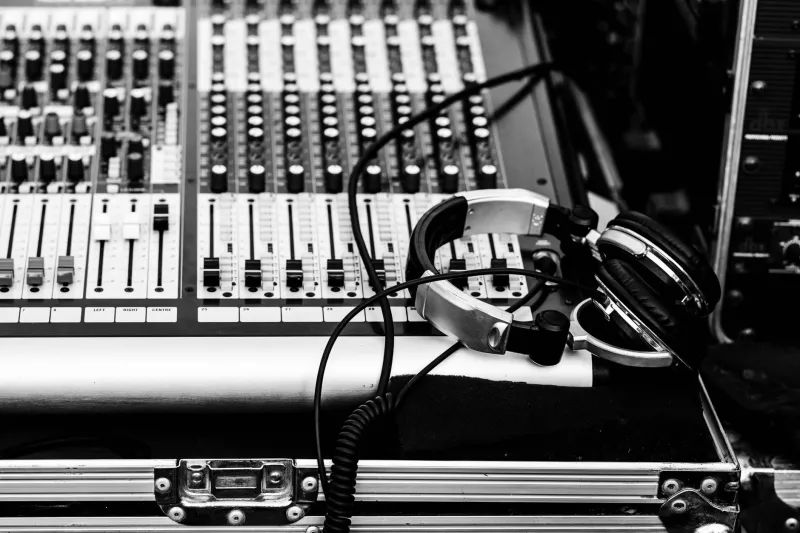
Imagine spending six months obsessing over every layer of a mix — the exact decay on a snare, the way a sub-bass sits just below the threshold of perception, the three-millisecond delay on a vocal that makes it feel like the singer is right next to you. Now imagine all of that getting quietly dismantled the moment someone hits play on their phone.
That's not a hypothetical. It's Tuesday for most mix engineers working in electronic music today.
The gap between what artists create and what listeners actually hear has become one of the most frustrating open secrets in the industry. And with streaming now accounting for the overwhelming majority of how Americans consume music, the stakes have never been higher.
The Invisible Remix Nobody Asked For
Every major streaming platform processes audio differently. Spotify uses the Ogg Vorbis format at varying bitrates depending on your subscription tier. Apple Music streams in AAC and has made a big deal about its Lossless and Dolby Atmos spatial audio options. Tidal has built its entire brand identity around HiFi quality. YouTube Music? It's complicated — and often not great.
But compression format is just the beginning of the problem. The bigger, less-discussed issue is loudness normalization.
All the major platforms now normalize playback volume so that songs hit roughly the same perceived loudness level. Spotify targets around -14 LUFS (Loudness Units relative to Full Scale). Apple Music sits closer to -16 LUFS. YouTube goes even quieter at about -14 LUFS but with different tolerance windows.
Here's where it gets messy: if a master is louder than the platform's target, the platform turns it down. That part's fine. But the way each platform handles the dynamics, the transients, and the overall tonal balance during that gain reduction varies — and producers say the differences are very much audible.
"I've had clients send me panicked messages because their track sounds completely different on Spotify versus Apple Music," says one Los Angeles-based mix engineer who has worked on releases for several mid-tier electronic labels. "It's not imaginary. The platform is literally changing the sound of the record."
Mastering for Every Room at Once
The traditional mastering process was already a balancing act — preparing a mix to translate well across car speakers, club systems, headphones, and TV setups. Now engineers are essentially being asked to master for specific platform playback engines, which behave like black boxes.
Some engineers have started delivering multiple masters: one version for Spotify, one for Apple, one for physical formats. It's time-consuming, sometimes cost-prohibitive for independent artists, and — depending on who you ask — a sign that something has gone fundamentally sideways in how we distribute music.
"The platform shouldn't be an instrument in the mix," says another engineer based in Nashville who crosses between country and electronic production. "But that's kind of what it's become. You have to account for what the algorithm is going to do to your work before it reaches anyone."
There's also the question of spatial audio. Apple's Dolby Atmos push has encouraged artists to create immersive mixes, but those mixes are then downmixed automatically for listeners who aren't using compatible hardware. The result can range from "surprisingly okay" to "completely broken," depending on how the original Atmos mix was structured.
Your Earbuds Are Also Kind of the Problem
Even if the platform delivered a perfect, lossless file, most people aren't hearing it with equipment that could reveal the difference. The default earbuds bundled with phones — or the $15 wireless buds from the discount bin — typically have frequency responses that boost bass and treble while scooping the mids. That's often described as a "fun" sound, but it's not an accurate one.
High-end consumer earbuds from brands like Sony, Sennheiser, and Apple's own AirPods Pro are meaningfully better, but they still apply their own EQ curves and signal processing. Many wireless headphones use active noise cancellation algorithms that can subtly alter the audio signal in ways most listeners never notice.
The irony is that the golden age of streaming has made music more accessible than ever while simultaneously making it harder to hear music the way it was intended.
What Listeners Can Actually Do About It
This isn't a situation where you're totally powerless. There are some concrete steps you can take to close the gap between the studio and your ears.
Upgrade your streaming quality settings. Most platforms default to a mid-tier bitrate to save data. Dig into your app settings and crank it up to the highest quality available. On Spotify, that's "Very High" at 320 kbps. On Apple Music, flip on Lossless if your connection and hardware can handle it.
Turn off "loudness equalization" or any auto-EQ features in your phone or streaming app settings. These sound like helpful tools but often flatten the dynamic range that engineers worked hard to preserve.
Try a wired connection when it matters. Bluetooth audio, despite major improvements in recent years with codecs like aptX and LDAC, still introduces some signal degradation. Plugging in — even with a basic USB-C to 3.5mm adapter — can make a real difference.
Invest in better headphones if you're serious about it. You don't need to spend a thousand dollars. The Sony WH-1000XM5 or the Sennheiser HD 560S both offer significantly more accurate reproduction than most consumer earbuds at reasonable price points.
Listen on a decent Bluetooth speaker at home. Counterintuitively, a good room speaker — even a single-driver Bluetooth unit — can sometimes give you a more honest sense of a mix than heavily processed earbuds, because it's projecting sound into actual space.
The Bigger Picture
None of this is going away. Streaming platforms have incentives to optimize for engagement and data efficiency, not for audiophile accuracy. The rise of AI mastering tools has added another layer of variability. And as music increasingly gets consumed through smart speakers, car infotainment systems, and social media clips, the chain between creation and perception keeps getting longer and less predictable.
But there's something worth holding onto here: producers and engineers still care deeply about the details. The work still happens at the level of individual frequencies, millisecond timing, and carefully chosen reverb tails. The vision is real, even if the delivery system is imperfect.
Knowing that gap exists — and understanding why — at least lets you listen a little more intentionally. And sometimes, that's the closest you can get to feeling the music the way it was actually made.