Why 3 AM Hits Different: The Sleep Science Behind Late-Night Creativity in Electronic Music
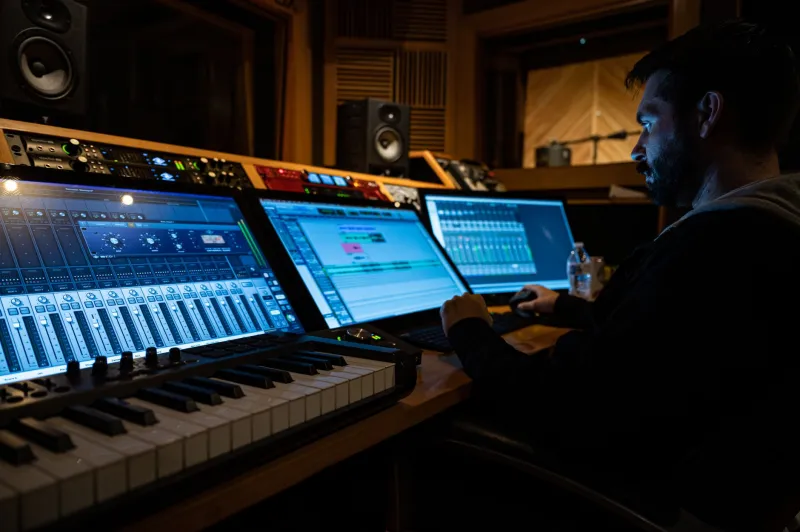
Ask almost any electronic producer when they do their best work, and a significant chunk of them will give you some version of the same answer: late. Like, really late. The kind of late that slides into early. The kind of late where your phone is showing 3:47 AM and you're still tweaking reverb tails on a hi-hat because the session is just flowing and stopping feels criminal.
This isn't just producer mythology, though it has definitely become that too. There's actual neuroscience behind why the hours when most people are asleep tend to unlock something different in creative brains — and understanding it might be one of the most practical things a producer can do for their output.
The Myth That Became a Culture
Late-night production culture is deeply embedded in electronic music's DNA. From the early Detroit techno pioneers working through the night in cramped apartments to modern bedroom producers who schedule their best sessions after the rest of the house goes quiet, there's a consistent narrative: the world gets small after midnight, and that smallness is useful.
Part of it is practical. Fewer interruptions. Roommates are asleep. Text messages slow down. The ambient noise of the outside world — traffic, neighbors, the general hum of daytime activity — drops away. For producers who work in untreated rooms, late night even brings acoustic benefits; the city quiets down, and the noise floor in your recordings drops with it.
But the practical stuff only explains part of it. Plenty of producers have proper soundproofed setups and still swear by working after midnight. Something else is happening.
Your Brain on a Clock It Didn't Choose
Chronobiology — the study of biological rhythms — has made serious strides over the past two decades, and what researchers have found is both fascinating and kind of validating for every producer who's ever caught grief for sleeping until noon.
Your chronotype is essentially your body's built-in timing preference — whether you're naturally inclined toward early mornings or late nights. It's largely genetic, regulated by your circadian clock, and influenced by light exposure and age. True night owls aren't just lazy or undisciplined. Their cortisol peaks later, their core body temperature drops later, and their cognitive alertness windows are genuinely shifted toward the evening and early morning hours.
Research published in journals like Chronobiology International has shown that working against your chronotype — forcing an evening person into morning productivity — produces measurably worse cognitive performance. Creativity, which depends heavily on the prefrontal cortex and its ability to make loose, associative connections, is especially sensitive to this kind of timing mismatch.
For producers who are natural night owls, the 3 AM session isn't a quirk. It's peak performance time.
The Tired Brain Paradox
Here's the part that surprises a lot of people: even for producers who aren't naturally nocturnal, there's a compelling case for working late. And it has to do with a counterintuitive finding from cognitive science.
Researchers at Albion College and other institutions have found that mild fatigue can actually enhance certain kinds of creative thinking. The mechanism is straightforward once you understand it: when you're fully alert and focused, your brain is pretty good at filtering out irrelevant associations and keeping your thinking narrow and goal-directed. When you're a little tired, those filters loosen. Your brain starts making connections it would normally suppress. Weird ideas get through. Unexpected combinations feel worth exploring.
For analytical work — debugging code, doing your taxes, writing precise technical documentation — this is terrible. You want your filters sharp. But for creative work, especially the kind of intuitive, experimental sound design that defines a lot of electronic production, that loosened filtering can be a genuine asset. The happy accident becomes more likely. The "wrong" choice turns out to be exactly right.
This is why so many producers describe late-night sessions as feeling more free — less second-guessing, less self-editing, more willingness to follow a sound somewhere unexpected.
What Successful Producers Actually Do
Los Angeles-based producer and mixer Kyle Voss has talked in various interviews about how he structures his weeks around a split schedule — analytical tasks like mixing, client revisions, and business emails happen before 4 PM. Creative writing sessions, new project starts, and sound design exploration are reserved for evenings and nights. He treats the two modes of work as genuinely different cognitive activities that require different brain states.
That kind of intentional scheduling reflects what the science suggests: the goal isn't to force yourself to work at odd hours for the sake of the aesthetic. It's to identify when your brain is actually in the right state for different kinds of tasks, and then respect that schedule.
New York producer and DJ collective member Priya Nair has described a similar approach, though she's an admitted early riser who does her most focused creative work between 5 and 9 AM before the city wakes up. Same principle, different clock. The key, she's said, is that she's not fighting her biology — she's working with it.
Practical Takeaways for Your Studio Routine
So what does all of this actually mean for how you structure your sessions? A few things worth considering:
Track your creative windows. For two weeks, keep a simple log of when you feel most in flow during sessions and when you're grinding. The pattern will probably be obvious. Honor it.
Separate analytical and creative work. Mixing, mastering prep, and technical troubleshooting are different cognitive tasks than songwriting, sound design, and arrangement. Try not to cram them into the same session.
Don't romanticize the grind. Chronic sleep deprivation isn't a creative strategy — it's a fast track to burnout and worse decision-making across the board. The productive late-night session is one that ends with actual sleep, not one that bleeds into a second sunrise because you forgot to stop.
If you're a morning person, own it. The 3 AM mythology is powerful in producer culture, but it's not a universal prescription. Early morning offers the same quiet, the same reduced-filter creative state after sleep, and the same sense of the world being temporarily yours. The hour matters less than the brain state.
Feel Every Frequency, On Your Own Schedule
Electronic music has always been made in the margins — in off-hours, in unconventional spaces, by people who didn't fit the standard template. The nocturnal studio session is part of that tradition, and the science behind it turns out to be pretty compelling. But the deeper point is that great production comes from understanding your own brain well enough to give it what it needs.
Whatever your clock looks like, find the hours when the frequencies hit different — and then protect them like the creative resource they actually are.