Signed Without a Signature: How the Best Producers Stamp Every Track With Their DNA

There's a moment every serious music fan knows. You're scrolling through a playlist, a new track kicks in, and before the first eight bars are done, you just know. That's a Jon Hopkins record. That's Deadmau5. That's Grimes. Nobody told you. There was no visual cue. The sound itself handed you a business card.
That's not magic. It's craft — and it's more deliberate than most people realize.
The idea of a sonic signature sounds abstract, but it breaks down into something surprisingly concrete: specific frequency decisions, processing habits, and signal chain choices that a producer makes so consistently, across so many records, that they stop being decisions and start being identity. If you've ever wondered what separates the producers whose music you recognize instantly from the ones who blend into the background, the answer lives somewhere in the frequency spectrum.
What We Actually Mean by a "Frequency Fingerprint"
Every sound occupies a slice of the frequency spectrum, roughly from 20Hz at the low end to 20kHz at the top. Sub-bass lives down in the rumble zone. Vocals, synths, and most melodic content fight for space in the mids. Presence, air, and shimmer occupy the upper registers. A producer's fingerprint is essentially a pattern — the frequencies they boost, cut, emphasize, or leave intentionally untouched across their body of work.
Deadmau5, for example, has spent years building a sound that lives in the upper-mid and high-frequency range. His leads are bright, almost clinical, with a sterile precision that feels more like architecture than performance. That's not just a vibe — it's a deliberate EQ philosophy. The way he treats his synth layers, leaving space in the low mids while pushing presence frequencies around 3-5kHz, creates that signature sense of width and mechanical clarity.
Flip to Grimes, and you're in completely different territory. Her production pulls the opposite direction in a lot of ways — compressed, lo-fi textures that feel almost suffocated, but in the most intentional way possible. She tends to let mid-range frequencies pile up rather than carve them out, creating a density that feels intimate and slightly claustrophobic. Her use of high-frequency distortion on vocals — treating them almost like a synth element rather than a voice — is one of the most identifiable moves in modern electronic music.
The EQ Habits That Become a Style
Here's the thing about EQ: most producers learn it as a corrective tool. You cut the mud out of a bass, you roll off the harshness on a synth. But the producers with strong sonic identities have moved past correction into expression. Their EQ decisions aren't cleaning up a sound — they're sculpting a personality.
Jon Hopkins is a masterclass in this. His approach to the low end is almost surgical. He doesn't just let bass frequencies sit — he shapes them with such precision that the sub information on tracks like Immunity feels like it has emotional weight attached to it. The way he handles the transition between sub-bass and mid-bass, often leaving a slight hollow in the 150-300Hz range, gives his music that sense of space and melancholy that's become inseparable from his name.
Producers like Four Tet take a different approach — one rooted in texture over clarity. Kieran Hebden's mixes often feel slightly hazy in the upper-mids, almost like someone left a thin gauze over the mix. That's not an accident or a limitation. It's a deliberate choice to prioritize warmth and organic feel over digital precision, and it shows up on virtually everything he's released.
Processing Chains as a Creative Stamp
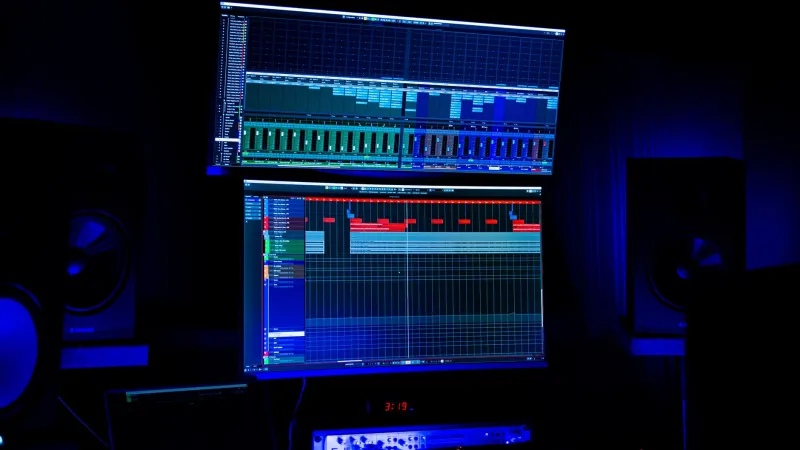
Beyond EQ, a producer's signal chain — the sequence of plugins, hardware, and effects they run audio through — becomes another layer of the fingerprint. The specific saturation plugin someone uses, the reverb algorithm they keep returning to, the way they set attack and release times on their compressors — these all leave traces in the audio that, over time, become recognizable.
Aphex Twin's use of custom software and unconventional processing methods means his music has a textural quality that nobody has been able to fully replicate, even when they've tried. The granular artifacts, the pitch-shifting anomalies, the sense that sounds are slightly wrong in a way that feels completely right — that's the result of a processing chain that's been refined over decades into something genuinely unique.
Same story with producers like Burial, whose entire aesthetic is built around a specific type of vinyl crackle, time-stretched vocals, and a reverb treatment that makes everything feel like it's being heard through a rain-soaked window. You could hand someone the same samples and plugins and they still wouldn't make a Burial record, because the fingerprint isn't just about the tools — it's about the specific, obsessive way those tools are used.
Building Your Own Sonic Identity Without Copying Anyone
For emerging producers, the lesson here isn't to reverse-engineer your favorite artist's signal chain and call it a style. That path leads to imitation, not identity. The more useful takeaway is to start paying attention to your own habits.
What frequency range do you keep returning to when you're making something you're proud of? Do your mixes tend to be bright or dark? Do you reach for reverb before compression, or the other way around? Are your low ends clean and defined, or do you let them breathe a little rough around the edges?
Those instincts — the ones you might not even notice because they feel like defaults — are the raw material of a signature. The producers who develop the most recognizable sounds aren't necessarily the ones with the most sophisticated techniques. They're the ones who've made peace with their preferences, doubled down on them, and applied them with enough consistency that they've become a language.
A few practical starting points: Pick two or three EQ moves you make constantly and make them more intentional. If you always boost around 8kHz, understand why — and then commit to it harder. If you have a go-to reverb preset, dig into what it's actually doing to your signal and start tweaking it toward something that sounds like you rather than like the preset designer.
The Long Game
Sonic identity isn't built in a project session or even a year of releases. Deadmau5 didn't sound like Deadmau5 on his first record. Grimes took several albums to fully arrive at the sound that made her unmistakable. The frequency fingerprint is the result of thousands of small decisions, made over time, with enough self-awareness to recognize what's working and enough confidence to keep doing it.
The good news? Every producer is already leaving traces of themselves in their music. The job is just to start listening for them.