One Mix, A Thousand Sounds: How Your Listening Device Is Rewriting the Song
You hit play on the same track three times in a row — once through your iPhone speaker propped up on the kitchen counter, once through your AirPods on the subway, and once through the stereo in your car. Three plays. Three completely different experiences. The beat feels heavier in the car. The vocals cut sharper through the earbuds. And on the phone speaker? Well, it's doing its best.
Here's the thing: the producer only mixed that song once. Everything that changes after that? That's your hardware talking.
Every Speaker Has an Opinion
At the core of this whole situation is something called frequency response — basically, how accurately (or inaccurately) a playback device reproduces the full spectrum of audio frequencies, from the deep sub-bass rumbling below 60Hz all the way up to the airy highs above 10kHz. A perfectly flat frequency response would mean every frequency gets equal volume. In practice, almost no consumer device works that way.
"Every speaker, every headphone, every pair of earbuds has its own coloration," says Marcus Webb, a Los Angeles-based mixing engineer who's worked with artists across the electronic and hip-hop spaces. "They're all boosting certain frequencies and cutting others. The question is whether those choices work with the music or against it."
Phone speakers are the most obvious offenders. The physical drivers inside a smartphone are tiny — we're talking maybe 10–15mm — and small drivers simply cannot reproduce low frequencies efficiently. All that bass your producer carefully sculpted? Gone, or at least dramatically reduced. What you're left with is a midrange-heavy, sometimes slightly harsh version of the original mix. It's not broken — it's just physics.
The Headphone Divide
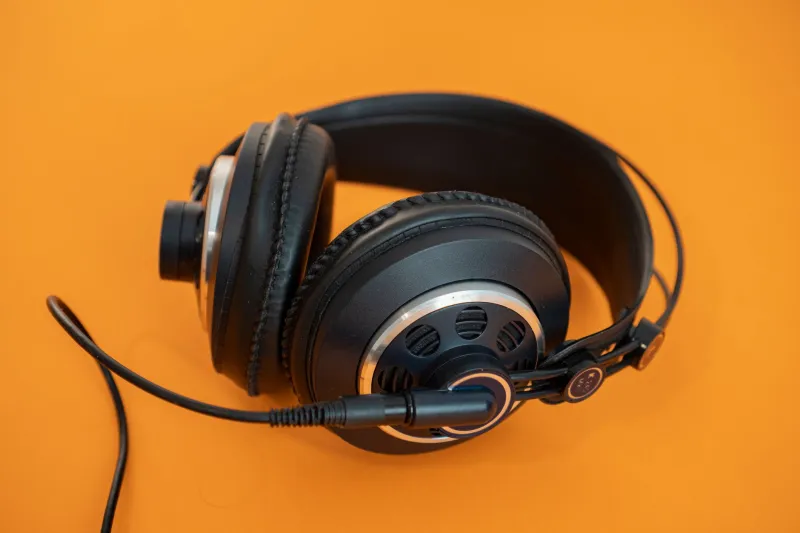
Step up to headphones and things get more interesting, but not necessarily more accurate. Consumer headphones from big lifestyle brands are almost universally tuned to a "V-shaped" curve — meaning the bass and treble are boosted while the mids get scooped out. It sounds exciting and punchy right out of the box, which is exactly why it sells. But that V-curve is adding low end that wasn't necessarily in the mix, and it can make certain electronic tracks sound muddy or overly aggressive.
On the flip side, audiophile-grade headphones and studio monitor headphones aim for a much flatter response. If you've ever put on a pair of Sennheiser HD 600s or Beyerdynamic DT 990s after years of using Beats, the first reaction is often "wait, where did the bass go?" It didn't go anywhere — you're just hearing the mix closer to how the engineer intended it.
Jamila Torres, a Brooklyn-based mix engineer who specializes in electronic and dance music, puts it plainly: "When I'm mixing, I'm checking on maybe eight or ten different playback systems before I call it done. NS10s, Auratones, earbuds, a Bluetooth speaker, my car — because I know the listener isn't sitting in a treated room with flat monitors. I have to meet them where they are."
Your Car Is a Studio (Sort Of)
For a lot of Americans, the car is actually where they do their most focused listening. And car audio is its own wild category. Factory-installed systems vary enormously — a base-model sedan with four small door speakers is a completely different environment than a premium trim with a branded sound system from Bose or Harman. Then there are aftermarket setups with dedicated subwoofers and amplifiers that can physically rattle the rearview mirror.
Car acoustics are also notoriously weird. The interior of a vehicle creates standing waves and resonances that can make certain frequencies pile up or cancel out depending on where you're sitting. Bass frequencies in particular tend to build up in the low-frequency range in ways that don't exist in open-air listening. That's part of why a track that sounded perfectly balanced on your headphones suddenly hits different when you're merging onto the highway.
"Car listening is actually one of the most important references for me," Torres says. "If a mix translates well in a car, it usually works everywhere. Cars are brutal — they expose every problem."
What Streaming Platforms Add to the Mix
And then there's the streaming layer on top of all this. Platforms like Spotify, Apple Music, and Tidal all apply their own loudness normalization algorithms, which means the volume and sometimes the dynamic character of a track gets adjusted automatically depending on the platform's target loudness level. Spotify normalizes to around -14 LUFS, while Tidal's settings vary. That normalization can subtly reshape how a track feels, especially if it was mastered hot.
All of this means the "final" version of a song is really more like a starting point — a stem that gets reinterpreted by every piece of hardware and software it passes through before landing in your ears.
Tips for Listeners Who Want to Hear More
You don't need to become a gear obsessive to get more out of your listening. A few simple moves can dramatically change what you're hearing:
- Try a flat EQ setting. Most streaming apps have built-in equalizers. Turning off presets and going flat gives you something closer to what the mix actually sounds like.
- Upgrade your earbuds gradually. You don't need to spend $500. Moving from stock earbuds to something like the Moondrop Chu or 7Hz Salnotes Zero — both under $25 — is a genuinely eye-opening experience for most people.
- Pay attention to your environment. Listening in a quiet room with headphones is completely different from background listening on a Bluetooth speaker. Neither is wrong, but knowing the difference helps.
- Use lossless audio when you can. Apple Music and Tidal both offer lossless streaming. On good headphones, the difference is real, especially in electronic music where high-frequency detail matters.
What Producers Can Actually Do About It
For producers and mixing engineers, the fragmented listening landscape is both a challenge and a creative constraint worth embracing. Webb's approach is methodical: "I build a translation checklist. Every mix gets checked on at least five systems before it leaves my hands. And I've learned to make decisions that hold up across all of them — not just the ones that sound good on studio monitors."
One increasingly common practice is creating multiple masters for different platforms and contexts — a "streaming master" that accounts for normalization, a "club master" that's optimized for big sound systems, and sometimes even notes to DSPs about preferred playback settings. It's more work, but it reflects the reality of how music actually gets consumed in 2025.
The frequency war isn't going to end anytime soon. Hardware will keep evolving, streaming platforms will keep tweaking their algorithms, and listeners will keep hearing slightly different versions of the same song depending on where they are and what they're wearing in their ears. The best anyone can do — producer or listener — is understand the battlefield a little better.
Because when you really know what your device is doing to the music, you start hearing things you never noticed before. And that's when listening gets genuinely interesting.