Secret Location, Public Instagram: The Strange Afterlife of the American Warehouse Party
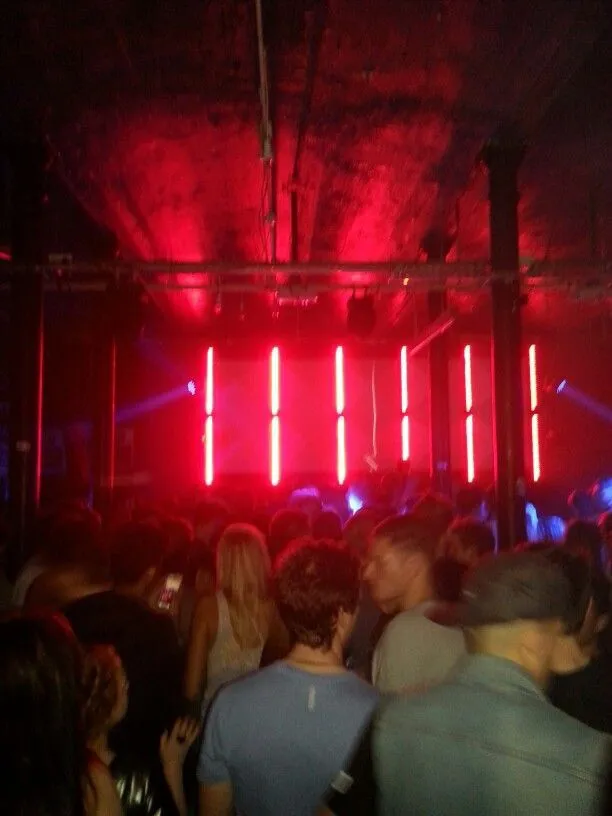
Photo: industrial warehouse rave party crowd lighting underground event, via i.pinimg.com
The address arrives the way it always has: late, cryptic, and only after you've paid. A pin drop. A cross-street. 'Look for the black door by the loading dock.' What's changed is everything around it — the ticketing platform, the follower count, the fact that the party has a brand.
The American warehouse party never went away. It just got a content strategy.
A Quick History of Questionable Real Estate
The warehouse rave was born out of simple economics: industrial space was cheap, empty, and nobody was around to complain about the noise. Chicago's early house scene, Detroit's afterhours culture, and New York's Loft-era descendants all built on the same foundation — find a big room, bring a sound system, keep your head down.
Then came the crackdowns. The late 90s and early 2000s brought zoning enforcement, the RAVE Act's chilling effect on promoters, and a generation of organizers who learned that the safest party is the one nobody can find until it starts.
That DNA is still there. But the modern version has evolved into something weirder.
The Semi-Legal Middle Zone
Today's warehouse scene lives in a gray area its ancestors never imagined. Many of the biggest 'underground' events are permitted — technically. Fire marshals have been placated. Insurance has been purchased. The illegality, where it exists, is more aesthetic than actual.
What survives from the old days is the ritual of secrecy. Location revealed day-of. Phone-free zones. Lineup announcements that read like ransom notes. It's theater now, but it's effective theater — scarcity drives demand, and demand drives the Instagram follow.
The cat-and-mouse game hasn't disappeared, though. In cities like LA and Philadelphia, organizers still relocate parties mid-week when a landlord gets nervous. Pop-up culture means the scene can vanish and reappear under a new name in a matter of days.
The Scalper Problem
Here's where the romance gets complicated. When a party's location is secret and its tickets are capped, you've created a perfect market for resellers. Scalpers scoop up $30 tickets to events with 500-cap rooms and flip them for triple. Because the address only goes out to ticket holders, buying secondhand feels risky — which is exactly what makes it lucrative.
Some organizers have fought back with will-call-only entry, ID matching, and bot-resistant ticketing. Others quietly don't mind, because a scalped-out party signals demand for the next one.
When Underground Becomes Content
The deepest tension in today's scene isn't legal — it's cultural. Every warehouse party now has a videographer. Clips hit Instagram Reels within hours, soundtracked and captioned, racking up views from people who will never attend anything.
That exposure builds scenes. It's how regional sounds travel, how unknown DJs get booked in other cities, how a party in an Atlanta rail yard can influence a promoter in Denver. The underground has never had this reach.
But reach is a double-edged blade. The party that grows too popular stops being able to operate the way it did. Capacity gets noticed by landlords. Clips get noticed by city officials. The 300-person secret becomes a 3,000-person event with a security budget and a line around the block — and something essential gets lost in translation.
What Happens Next
The healthiest scenes seem to be the ones that accept the cycle. A party goes underground, builds a name, surfaces, gets too big, and spawns three smaller offshoots run by people who learned the trade in its back rooms. The warehouse isn't a venue — it's an incubator.
The 90s ravers would barely recognize the current version: the sponsored bars, the QR codes, the drone shots. But the core transaction is unchanged. A big empty room, a loud system, and the thrill of being somewhere you're not entirely sure you're supposed to be.
Some things don't need an Instagram account to survive. They just need a black door by the loading dock.