Warm Machines: Why Today's Top Electronic Producers Are Going Back to Analog
There's a paradox sitting at the center of modern electronic music production. The tools have never been more powerful, the software never more sophisticated, and yet some of the most in-demand producers in the game are deliberately routing their sessions through gear that predates the internet. Vintage compressors, reel-to-reel tape machines, and analog synthesizers from the '70s and '80s are showing up in studios from Brooklyn to Los Angeles — and not just as wall decorations.
So what's actually going on? Is this a genuine sonic preference, a marketing move, or just expensive nostalgia? The answer, as it turns out, is a little bit of all three.
The Digital Ceiling
To understand the analog resurgence, you have to first understand what digital audio does well — and where it quietly falls short. Modern DAWs like Ableton Live and Logic Pro can reproduce sound with extraordinary precision. That precision, though, is also part of the issue.
Digital audio operates in a realm of clean, linear processing. When you push a digital signal too hard, it clips sharply and unpleasantly. Analog gear behaves differently. Push an analog circuit into saturation and you get harmonic distortion — a layering of additional overtones that the human ear tends to interpret as richness, presence, and warmth. It's not a flaw. It's a feature that took decades of digital emulation to even partially replicate.
"There's a ceiling with digital that you kind of bump into," says Marcus Webb, a Chicago-based house producer whose credits include remixes for several mid-major dance labels. "Everything sounds clean, everything sounds correct, but there's this flatness that creeps in. The first time I ran a mix through a real tape machine, I heard the difference instantly. It just breathed."
That breathing quality — the subtle compression, the soft saturation, the gentle frequency roll-off in the high end — is what producers mean when they talk about analog warmth. It's not a single characteristic but a cluster of sonic behaviors that happen naturally when audio passes through analog circuitry.
The Hybrid Workflow Revolution
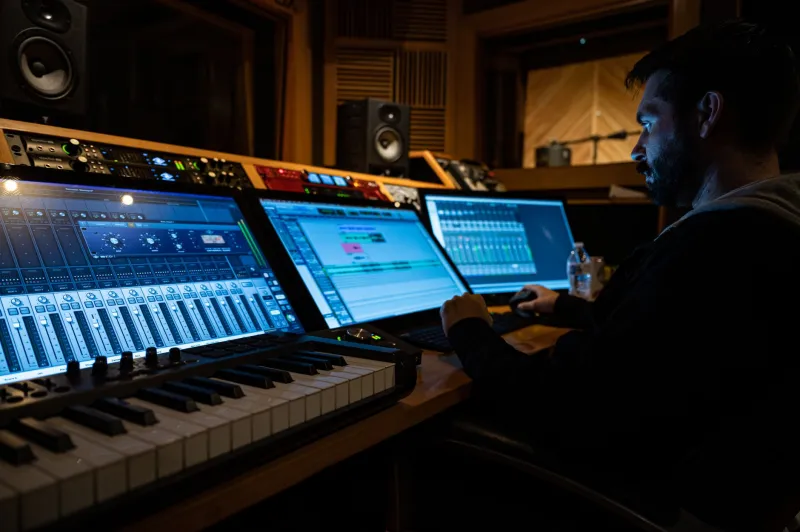
Few serious producers are abandoning their DAWs entirely. Instead, what's emerged is a hybrid workflow that uses digital tools for their organizational power and precision while routing key elements through analog hardware at strategic points in the signal chain.
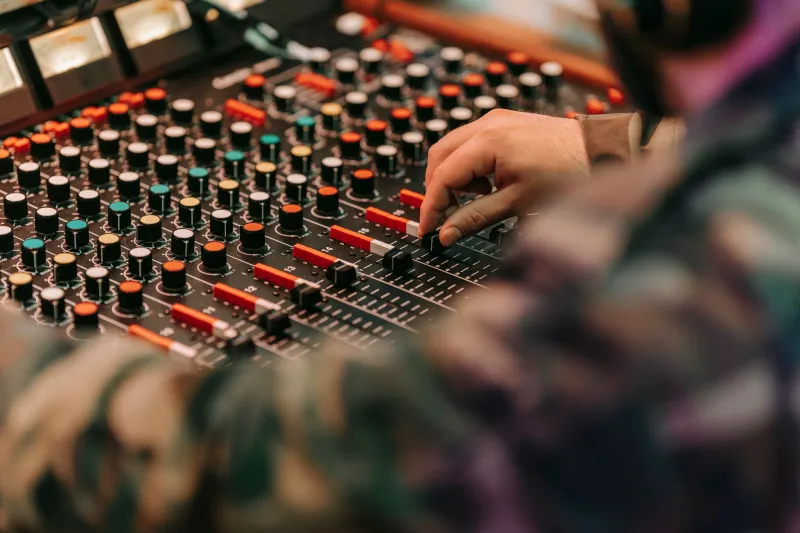
A typical hybrid setup might look like this: drums and synths are programmed in the box, then stems are printed through an analog summing mixer. Vocals or lead synth lines might pass through a vintage tube preamp before being recorded back into the DAW. The final mix might hit a reel-to-reel tape machine at a specific level to introduce subtle saturation before the mastering stage.
This approach has become so common that gear rental studios in cities like Nashville, New York, and LA now offer hourly access to vintage outboard gear for producers who can't justify the purchase price. A well-maintained Neve console or an Ampex tape machine can cost anywhere from $10,000 to well over $100,000, depending on condition and model.
"I don't own any of it outright yet," admits Daniela Cruz, a Los Angeles-based producer who works primarily in the deep house and melodic techno space. "But I budget for studio time specifically at rooms that have the analog chain. It's a line item in my production budget the same way mixing or mastering is."
Measurable Differences, Debated Meanings
Here's where things get genuinely interesting — and a little contentious. Audio engineers can absolutely measure the differences between a digital signal and one that has passed through analog hardware. Spectrum analyzers will show the harmonic content added by tape saturation. Oscilloscopes reveal the soft clipping behavior of analog circuits versus the hard clipping of digital ones.
But whether those differences are audible to the average listener, or whether they translate meaningfully to a Spotify stream compressed to 128kbps, is a debate that gets heated in production forums and studio hallways alike.
Some engineers argue that the sonic benefits of expensive analog gear are largely lost by the time a track goes through streaming compression. Others insist that even if the specific details are compressed away, the cumulative effect of analog processing creates a mix that feels more cohesive and less fatiguing to the ear — qualities that survive the streaming pipeline even if the technical specifics don't.
"I've done blind tests," says Webb. "Not everyone can pick out the analog version. But when I ask people which mix they'd rather keep listening to for an hour, they almost always pick the one that went through hardware. There's something psychoacoustic happening that's hard to quantify."
Status Symbol or Sonic Tool?
There's no getting around the social dimension of the analog revival. In an era where producer culture is highly visible on social media, the image of vintage gear stacked in a home studio carries real cultural weight. A photo of a Moog synthesizer or a Roland TR-808 communicates a certain seriousness and investment that a screenshot of a plugin library simply doesn't.
That visibility has driven some criticism — the accusation that analog gear has become a status symbol more than a genuine sonic necessity. There's probably some truth to that. Not every producer running audio through a vintage preamp is doing it because they've done A/B comparisons and determined it's the optimal choice for their workflow. Some of them are doing it because it looks and feels cool, and because the culture rewards that aesthetic.
But the status and the substance aren't mutually exclusive. The gear can be both a meaningful sonic tool and a cultural signifier. In fact, that's been true of instruments throughout music history.
The Plugin Question
Plugin developers have spent years trying to close the gap. Companies like Universal Audio, Waves, and Softube have built entire product lines around painstaking digital emulations of classic hardware. UAD's tape machine emulations, for instance, are widely considered some of the best-sounding plugins in any genre.
So why aren't they enough for the producers who've gone back to hardware?
"The emulations are incredible, honestly," says Cruz. "Some of them are genuinely hard to tell apart on their own. But when you're running a whole mix through hardware, there's an interaction between the components — the way the transformer in a compressor talks to the tape machine — that a plugin can't replicate. It's a system behavior, not just a single unit behavior."
That system interaction is the frontier that plugin developers are still working to crack. Some newer approaches use convolution and dynamic modeling to capture not just the static behavior of a unit but how it responds to different signal levels. The gap is narrowing. But for now, hardware still has the edge in the ears of the producers who've used both.
What This Means for the Future
The analog revival isn't going to replace digital production — that would be like arguing that film photography is going to replace digital cameras. But it's reshaping how producers think about their signal chains, their studio investments, and their sonic identity.
For listeners, the practical takeaway is simple: that richness you feel in a well-produced electronic track, the sense that it has weight and depth, often has a specific technical origin. Someone made a deliberate choice somewhere in that signal chain to introduce imperfection, and that imperfection is doing a lot of emotional work.
The frequency wars between analog and digital aren't really wars at all. They're a conversation between eras, and the most interesting producers right now are fluent in both languages.