Turned Up to Eleven: The Battle Over Volume That's Quietly Changing How Music Sounds
There's a moment most music fans have experienced without ever knowing what to call it. You're cruising through a playlist, everything feels balanced, and then a track drops that just hits differently — not because the melody is catchier or the mix is cleaner, but because it feels louder, more aggressive, almost like it's leaning into your headphones. That's not an accident. That's the loudness wars at work, and they've been reshaping modern music production for decades.
What Are the Loudness Wars, Exactly?
The term gets thrown around in producer forums and audio engineering circles, but here's the short version: since roughly the late 1980s, record labels and mastering engineers have been in an ongoing competition to make their releases sound louder than everything else on the market. The logic was simple — louder tracks grab attention on the radio, in retail stores, and on shuffle playlists. If your song sounds bigger, listeners perceive it as better.
The technical tool behind all of this is dynamic range compression. When a mastering engineer slams a track's dynamic range — the distance between the quietest and loudest moments — they can push the overall volume higher without technically exceeding the ceiling. The result is a dense, wall-of-sound feel. But something gets lost in the process: the natural breathing of the music, the subtle swells, the quiet moments that make the loud ones hit harder.
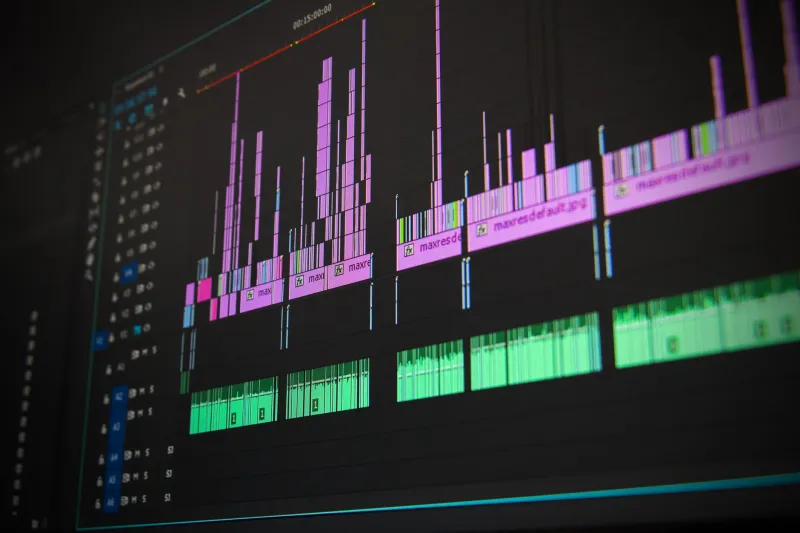
By the mid-2000s, albums were being mastered so aggressively that audiophiles started comparing waveforms online and pointing out tracks that looked more like solid bricks than audio signals. Metallica's Death Magnetic became a kind of cautionary tale — fans literally petitioned for a less compressed version after noticing the Guitar Hero game mix sounded better than the CD release.
Streaming Changed the Rules (Sort Of)
Here's where things get interesting for anyone paying attention to the current landscape. When Spotify, Apple Music, Tidal, and YouTube Music rolled out loudness normalization — essentially a system that levels playback volume across all tracks — a lot of people assumed the loudness wars were finally over. The idea was that if every song gets normalized to roughly the same perceived volume, there's no competitive advantage to cranking your master louder.
Spotify normalizes to around -14 LUFS (Loudness Units relative to Full Scale). Apple Music targets -16 LUFS. Tidal and Amazon Music sit in similar ranges. On paper, this should have flattened the playing field.
But it didn't — not entirely. What happened instead is that the loudness wars shifted rather than ended. Producers and labels learned that if a track is mastered louder than the platform's normalization target, the platform turns it down — but it doesn't restore the dynamic range that was already compressed out. So you still end up with a squashed, dense mix, just at a lower volume. The creative damage is already done.
Mastering engineer Claire Musil, who works with independent electronic artists across the US, put it plainly in a recent conversation: "A lot of clients still come to me asking for the loudest possible master. I have to explain that on Spotify, loud just means your track gets turned down more. What you actually want is a master that sounds alive at their target level — and that means giving the music room to breathe."
The Creative Cost Nobody Talks About
Beyond the technical arguments, there's a real creative cost to hyper-compressed masters that deserves more attention. Electronic music — the genre closest to Rayez Music's heart — is built on dynamics. Think about the way a well-produced techno track builds tension by pulling elements back before a drop. Or the way ambient producers like Burial use near-silence as an instrument. Over-compression doesn't just affect the loudest moments; it flattens the entire emotional arc of a track.
For genres like hip-hop and pop, where punch and presence matter enormously, the pressure to master hot is still very real. Producers working in trap and drill often feel caught between what sounds right sonically and what their label A&R expects to hear in a playback session. "If it doesn't hit hard in the first five seconds, they think something's wrong with the mix," one anonymous producer told us. "It doesn't matter that you've lost three dB of headroom to get there."
The irony is that some of the most critically praised records of the past decade — from Frank Ocean's Blonde to Billie Eilish's debut album — were mastered with relatively conservative loudness levels. They trusted the music to do the work. And listeners noticed.
What Your Ears Are Actually Going Through
Let's talk about the physical side of this, because it matters. Prolonged exposure to loud, dynamically compressed audio doesn't just cause fatigue — it can contribute to long-term hearing damage. The human auditory system is designed to process contrast. When that contrast is removed and replaced with a constant wall of sound, your ears work harder to extract information, and listener fatigue sets in faster.
Audiologists in the US have noted an uptick in younger patients reporting tinnitus and noise-induced hearing loss, and while earbuds and headphone volume are the primary culprits, the way music is mastered plays a role too. A heavily compressed track listened to at moderate volume through earbuds for an hour puts more sustained stress on the inner ear than a dynamically rich recording at the same volume setting.
The American Academy of Audiology recommends keeping personal listening levels under 85 decibels and taking regular breaks — advice that feels increasingly hard to follow when every new release is engineered to demand your full attention.
Where Does the Industry Go From Here?
There's a growing movement among mastering engineers and producers who are pushing back against the loudness-first mindset. Organizations like the Audio Engineering Society have published guidelines for streaming-optimized masters, and some independent labels are actively marketing the dynamic quality of their releases as a selling point.
High-resolution audio is having a moment too. Apple's Lossless and Spatial Audio tiers, Tidal's HiFi plans, and Amazon Music HD are all positioning sound quality as a premium feature worth paying for. Whether that translates into better mastering practices industry-wide is still an open question — but the conversation is louder (no pun intended) than it's been in years.
For producers reading this: the tools to make a great-sounding, dynamically alive master have never been more accessible. Plugins like iZotope Ozone and FabFilter Pro-L give you granular control over how your track behaves across different platform targets. The loudness wars aren't over, but for the first time in a while, the artists who choose not to fight them might actually be winning.
At Rayez Music, we believe the best frequencies are the ones you can feel — not just the ones that hit hardest out of the gate. Sometimes the most powerful thing a track can do is leave a little space.