Press Play on the Robot: How AI Music Tools Are Reshaping Electronic Production Without Replacing the Producer
The Machine Showed Up to the Session
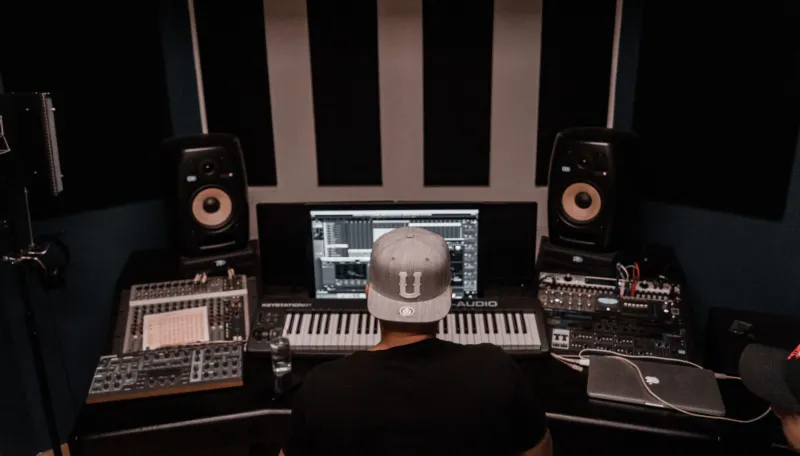
Somewhere between the third cup of coffee and the fourth failed drop, a Los Angeles-based producer named Marcus Delray did something unconventional. He typed a text prompt into an AI music tool, hit generate, and listened as a surprisingly decent four-bar loop filled his headphones. His reaction? A shrug, a smirk, and then — almost immediately — he started tweaking it.
"It gave me something to react to," Delray says. "That's actually useful."
That reaction — curious, not panicked — is becoming the dominant mood among electronic producers experimenting with AI generation tools like Suno, Udio, and a growing roster of DAW-integrated AI plugins. The technology is advancing fast enough that music journalists have been sounding alarm bells for a couple of years now. But spend any real time talking to the people actually making electronic music for a living, and you'll find a community that's way less rattled than the headlines suggest.
What These Tools Actually Do (And What They Don't)
Let's be honest about what we're dealing with. Current AI music generators can produce competent loops, passable chord progressions, and surprisingly textured ambient pads. Feed them the right prompt and they'll spit out something that sounds like a genre exercise — technically proficient, emotionally neutral.
What they struggle to do is tell a story. Electronic music, even at its most abstract, carries intention. The way a Detroit techno track builds pressure over twelve minutes isn't just pattern repetition — it's a producer understanding a room, a crowd, a specific kind of physical release. An AI tool trained on existing tracks can approximate the shape of that experience, but approximation and authenticity are two very different things on a dance floor.
Producer and sound designer Keisha Vann, who splits her time between Chicago and New York working on club-oriented house music, has been road-testing AI tools for nearly a year. Her verdict is measured. "These things are great for breaking through blocks," she explains. "I'll generate something terrible, and the terribleness of it will push me toward what I actually want to make. It's like having a bad rough draft that clarifies your vision."
That framing — AI as creative friction rather than creative replacement — keeps coming up in conversations with working producers.
The Roles That Are Actually Vulnerable
None of this means the industry gets to exhale completely. There are specific corners of electronic music production where AI pressure is real and growing.
Stock music and sync licensing are the most obvious pressure points. Platforms that supply background music for YouTube videos, podcasts, and corporate presentations are already integrating AI-generated content at scale. For producers who built side income streams supplying those libraries, the math is getting harder.
Budget-tier commercial work — the kind of job where a client needs a generic EDM sting for an app or a thirty-second hype track for a product launch — is similarly exposed. When AI can produce "good enough" in three minutes for nearly zero cost, the economics of that work shift dramatically.
But here's the thing: most serious electronic producers already knew that work was a race to the bottom. The producers building genuine artistic careers, developing a sound, cultivating a fanbase — those are different conversations entirely.
The Irreplaceable Human Variable
Ask any producer what their actual competitive advantage is, and you'll hear some version of the same answer: perspective. The specific combination of influences, life experience, technical obsessions, and emotional preoccupations that makes one artist's music sound like theirs and no one else's.
AI tools are trained on existing music. By definition, they're optimized for the familiar. They can recombine what's already been done with impressive fluency, but they don't have a perspective on what should exist next.
"My music comes from being a Black woman who grew up in the South Side of Chicago and discovered house music through my aunt's record collection," Vann says. "No prompt captures that. No training data contains that specific context."
Delray makes a similar point from a different angle. "Taste is curation. Knowing which three seconds of that AI loop are worth keeping and building a whole track around — that's the skill. The AI didn't make the decision. I did."
AI as Instrument, Not Replacement
The most useful mental model might be this: AI music tools are becoming just another piece of studio equipment. Like a synthesizer that ships with thousands of presets, the tool itself is neutral. What a producer does with it determines whether it produces something meaningful.
Some producers are already leaning into this framing aggressively, using AI-generated elements as raw material the same way an earlier generation of producers sampled vinyl records. The output gets chopped, pitched, layered, and filtered through so many layers of human decision-making that the origin becomes almost irrelevant.
That's not so different from how electronic music has always worked. The genre was built on machines — drum machines, sequencers, synthesizers — that critics once dismissed as threats to "real" musicianship. Every time a new tool arrived, producers absorbed it, bent it to their purposes, and made something the tool's creators never anticipated.
The producers paying closest attention right now aren't asking whether AI will replace them. They're asking how to use it before someone else figures it out first.
That's probably the right question.