Every Genre Has a Color: Mapping the Sensory Universe of Electronic Music
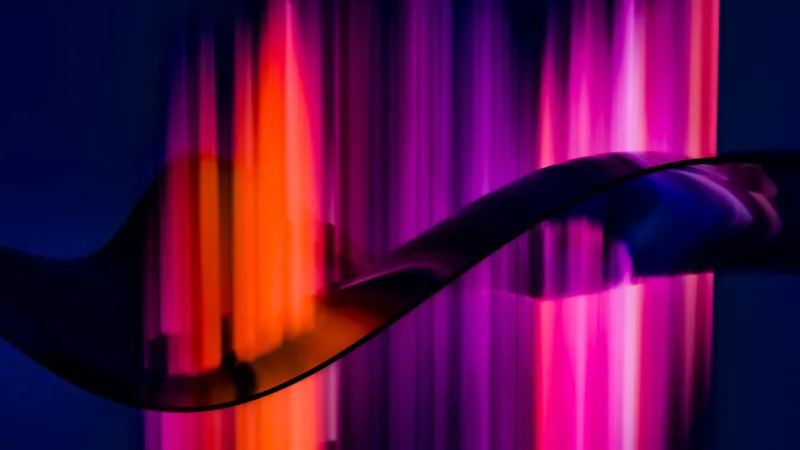
Close your eyes and think about the last time a piece of music genuinely moved you. Not just emotionally — physically. The way a certain bass frequency seems to vibrate somewhere behind your sternum, or how a particular synth pad creates something that feels less like a sound and more like a weather system moving through the room.
For most people, that experience stays in the realm of feeling. For a smaller but significant portion of the population, music doesn't just create feeling — it creates imagery. Color, texture, shape, and light that appears as automatically and involuntarily as the sound itself. This is synesthesia, and electronic music, with its vast frequency range and extreme production variety, may be the genre most likely to trigger it.
We've been thinking about this at Rayez Music since our earlier feature on producers who experience music as color. That piece focused on the creator side of the equation. This time, we wanted to go broader — across subgenres, across listeners, and into the neuroscience that helps explain why certain kinds of electronic music seem to generate richer cross-sensory experiences than others.
What Synesthesia Actually Is
Before we get into the genre-by-genre breakdown, a quick clarification: synesthesia isn't a single experience. It's a family of neurological phenomena in which stimulation of one sense automatically triggers an experience in another. The most common form is grapheme-color synesthesia, where letters and numbers have inherent colors. Sound-to-color synesthesia — chromesthesia — is less common but well-documented, affecting roughly one in three thousand people in its full clinical form.
But here's the thing that makes this relevant to a much wider audience: researchers have found that milder forms of cross-sensory association are significantly more common than full synesthesia. Studies suggest that a substantial portion of the general population experiences some degree of sound-to-color or sound-to-texture association, even if those associations are weaker and less consistent than in clinical synesthetes.
"The line between synesthesia and what we might call strong sensory association is blurrier than people think," says Dr. Rachel Okonkwo, a cognitive neuroscientist at a research university in the Pacific Northwest who studies cross-modal perception. "When you play music to people and ask them to assign colors, there's a remarkable degree of agreement even among people who don't identify as synesthetic. Low frequencies tend to map to dark colors. High-frequency, bright timbres tend to map to light or warm colors. These aren't random."
Industrial Techno: Silver, Fracture, and Negative Space
Start at the hardest edge of the electronic spectrum and the sensory reports are remarkably consistent. Industrial techno — think the brutal percussion and metallic textures of producers working in Detroit or Berlin's underground — generates what our respondents described in strikingly similar terms: silver, gray, and white, with sharp edges. Fractured geometry. Darkness punctuated by sudden, harsh light.
"It's like looking at a welding spark in a dark room," wrote one respondent from Chicago. "Everything is black and then there's this violent white flash and then black again."
The neuroscience here isn't hard to trace. Industrial techno relies heavily on transient-rich sounds — the sharp attack of a kick drum, the metallic ring of a hi-hat, the abrasive texture of distorted percussion. Research on cross-modal correspondence consistently finds that sharp, high-frequency, percussive sounds map to angular shapes and high-contrast visual experiences. The genre is essentially a concentrated delivery system for the specific sonic qualities that trigger those responses.
Ambient Music: The Blue-Green Gradient
Swing to the opposite end of the spectrum and the sensory landscape shifts completely. Ambient music — from the classic work of Brian Eno to the contemporary output of artists like Stars of the Lid or Grouper — generates a strikingly different palette. Blue and green dominate, with soft gradients, slow movement, and a consistent sense of depth or dimensionality.
"It's always like water for me," said one respondent from Seattle. "Different shades depending on the track. Some of it is ocean-deep blue, some of it is the green of shallow water with light coming through."
Among our respondents, ambient music generated the most consistent synesthetic reports — meaning more people described similar colors and textures than in any other subgenre. Dr. Okonkwo suggests this might be related to the genre's relatively narrow frequency content and slow harmonic movement.
"When you have a dense, rapidly changing sound, the brain has a lot of competing information to process. The cross-modal signal can get noisy. Ambient music, by contrast, gives the brain a single, sustained stimulus to respond to. The associations have time to form clearly."
Deep House: Warmth, Amber, and the Feeling of Velvet
Deep house occupies a fascinating middle ground in the sensory maps we gathered. Where industrial techno is cold and sharp and ambient is cool and fluid, deep house consistently generates warm responses — amber, gold, and orange tones, with tactile descriptions that lean heavily on words like "velvet," "smooth," and "rounded."
This tracks with the production characteristics of the genre. Deep house is built around warm analog bass tones, lush chord stabs, and a midrange-forward mix that emphasizes the frequency range where human speech lives. Research on cross-modal correspondence finds that warm timbres — sounds with strong harmonic content in the midrange — reliably map to warm colors and smooth textures.
"It's amber. Always some version of amber," wrote a respondent from Atlanta. "Like looking at a room through a glass of whiskey."
Drum and Bass: Speed, Streak, and Electric Blue
Drum and bass introduces a variable that the slower genres don't have to deal with: tempo. At 170-plus BPM, the genre's breakbeats create a strobing, kinetic quality in synesthetic reports that's unlike anything in the ambient or deep house responses.
Electric blue is the dominant color here, but the more distinctive quality in our respondents' descriptions is movement — streaks, flashes, and the sense of something moving very fast through a dark space. Several respondents used the specific image of light trails in long-exposure photography.
This makes sense from a perceptual standpoint. Rapid auditory events create a sense of temporal urgency that the visual system interprets as movement. The genre's characteristic bass reese — a detuned, buzzing bass sound — also generates strong low-frequency content that maps to deep, saturated colors rather than the lighter tones associated with higher frequencies.
Why This Matters for Producers
Understanding the synesthetic landscape of electronic music isn't just an interesting curiosity — it has real implications for how producers think about their work. If certain production choices reliably trigger specific sensory associations, those associations become part of the emotional toolkit.
A producer crafting an ambient track who understands that slow-moving, mid-frequency pad tones generate a blue-green, fluid visual response can lean into that — or deliberately subvert it by introducing elements that create visual friction. A techno producer who knows that transient-rich sounds create sharp, high-contrast imagery can use that knowledge to calibrate the intensity of a track's sensory impact.
"I don't have full synesthesia, but I definitely see colors when I'm mixing," says Marcus Webb, the Chicago house producer we spoke with for our analog feature. "It's part of how I know when something is working. If the colors feel right — if they're consistent with what the track is supposed to feel like — then the mix is probably in a good place."
The Frequency Connection
Across all the genres and all the responses we gathered, one pattern held remarkably consistent: frequency range is the single strongest predictor of color temperature. Low frequencies map to dark, warm, or saturated colors. High frequencies map to light, cool, or bright ones. Mid frequencies — the range where most of the emotional content in music lives — generate the most varied and personally specific responses.
This isn't surprising from a neuroscience perspective. The brain's cross-modal processing systems appear to use loudness and pitch as primary variables when generating sensory associations. What makes electronic music particularly interesting is that it routinely operates across the entire frequency spectrum simultaneously, creating layered sensory experiences that acoustic instruments rarely produce.
Every subgenre has carved out its own territory in that spectrum, and in doing so, each has created a distinct sensory fingerprint. Industrial techno lives in the transients. Ambient lives in the sustain. Deep house lives in the warmth. Drum and bass lives in the speed.
The music you love isn't just a sound. It's a landscape. And if you pay close enough attention, you might already know what color it is.