The Name Behind the Name: Inside the Secret World of Ghost Production
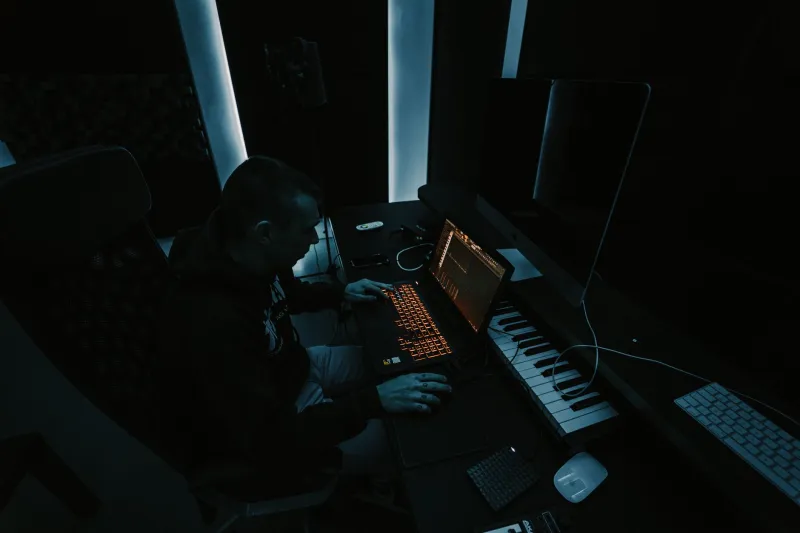
The DJ is on stage at a festival in Miami, hands raised, crowd going absolutely insane. The drop hits. Forty thousand people lose their minds. Back home, in a small apartment in Stockholm, someone watches the livestream on a laptop and feels something complicated — pride, maybe, or just a quiet satisfaction — knowing that the track those forty thousand people are losing their minds to came out of their studio.
Their name isn't on it. It never will be.
Ghost production has existed in electronic music for decades, but the conversation around it has gotten louder in recent years as the economics of the DJ industry have grown more extreme and the pressure on artists to release constantly has become almost unmanageable. Today, it's an open secret that spans every corner of the genre — from commercial EDM to underground house and techno — and yet it remains one of the most taboo subjects in the culture.
We spent several weeks talking to people on both sides of the transaction. Most requested anonymity. What they described is a functioning, surprisingly organized shadow economy operating in plain sight.
How the Market Works
At its most basic, ghost production is simple: a producer creates a finished track — or sometimes just an arrangement, a set of stems, or a core musical idea — and sells it to an artist who then releases it under their own name. The original creator receives a one-time payment, signs away all rights, and disappears from the story.
The market for these services ranges from budget to premium. Entry-level ghost production platforms, several of which operate openly online, sell finished tracks for anywhere from $500 to $5,000 depending on quality and style. At the higher end, established ghost producers working directly with name-brand artists can command $10,000 to $50,000 or more per track, according to multiple sources we spoke with.
"It's a real market with real pricing tiers," says one ghost producer based in Atlanta who asked to be identified only by his producer tag, Lenz. "You've got the catalog sellers who churn out tracks for whoever's buying, and then you've got the specialist guys who work with specific artists on a long-term basis. Those relationships can be worth six figures a year."
Lenz says he has been ghost producing full-time for four years, primarily in the progressive house space. He estimates he has contributed to tracks that have collectively generated millions of streams. His name appears on none of them.
Why Artists Buy
The demand side of this equation is driven by a structural problem in modern DJ culture. The expectation — from labels, from booking agents, from fans — is that artists release music consistently. A DJ who goes more than a few months without new material risks losing relevance, slipping in the DJ Mag rankings, or watching their booking fee erode.
But DJing, touring, and producing are genuinely separate skill sets. Many artists who built their careers through exceptional mixing and crowd-reading never developed deep production chops. Others had the skills once but have been on the road so relentlessly that they simply don't have the studio hours anymore.
"People don't understand the math of a touring DJ's life," says one artist manager who works with several mid-tier festival headliners and agreed to speak on background. "Your client is in a different city four or five nights a week. When are they supposed to make music? The label wants two releases a year minimum. Something has to give."
The solution, for many, is to outsource. Not all of it, necessarily — some artists co-produce, contributing ideas, direction, and revisions while a ghost producer handles the technical heavy lifting. But in other cases, the transaction is more complete: a finished, mastered track changes hands, and the artist's contribution is essentially the brand equity they bring to the release.
The Legal Gray Zone
Here's where things get ethically thorny. Ghost production, in its pure transactional form, is entirely legal. The original creator sells their rights; the purchasing artist acquires them. There's no law against releasing music you paid someone else to make.
But the practice sits in uncomfortable territory relative to the culture's values. Electronic music, particularly underground scenes like techno and house, places enormous weight on authenticity. The idea that an artist's music is a direct expression of their creative identity is foundational to how the culture assigns credibility and respect. Ghost production, by definition, complicates that narrative.
"The fans think they're buying into someone's vision," says Nina Hartwell, a music attorney based in New York who has worked on several ghost production agreements. "Whether that's a problem legally depends entirely on how the artist presents themselves. If they're actively claiming to have made the music when they didn't, that starts to brush up against misrepresentation. But most artists are careful not to say anything specific."
The contracts themselves, Hartwell notes, are typically airtight on confidentiality. Ghost producers sign NDAs as a matter of course. Breaching one can result in significant financial penalties. This is why, despite the practice being widely known, documented cases of public disclosure remain rare.
The Ghost Producer's Perspective
For the people doing the actual creating, the emotional calculus is complicated. The money is real and often better than what the same producer could make releasing music under their own name — a painful irony that several of our sources acknowledged directly.
"I've had tracks I sold do way better than anything I've released myself," says Lenz. "At first that stings. Then you kind of make peace with it. I'm not a performer. I don't want to be on stage. I just want to make music and get paid for it. This is a way to do that."
Not everyone in the ghost production world is that sanguine about it. One producer we spoke with, who has been working in the space for nearly a decade and asked not to be identified in any way, described a growing sense of dissonance between the work's quality and its invisibility.
"I made a track that got played at [a major US festival]. I watched the video online. The crowd was incredible. And I'm just... not there. I don't exist in that moment. It's a weird feeling. I don't regret the money, but I'd be lying if I said it didn't affect me."
Is Anything Changing?
There are small signs that the culture is beginning to engage more honestly with ghost production. A handful of artists have publicly acknowledged using outside producers in various capacities, framing it as collaboration rather than outsourcing. Some in the community have argued that the real-world norm — where music is made collaboratively and the frontperson takes the credit — isn't so different from how pop music has always worked.
But the stigma remains powerful, particularly in scenes that define themselves around authenticity. Until the culture genuinely grapples with the gap between its values and its economics, the ghost production market will keep operating exactly where it is now: in the space between the music and the name on the label.
Somewhere in Stockholm, someone is starting a new project file. The crowd at the next festival will never know their name. For now, that's exactly how both parties want it.