Synth for Everyone: The Affordable Hardware Boom That's Putting Legendary Sound in New Hands
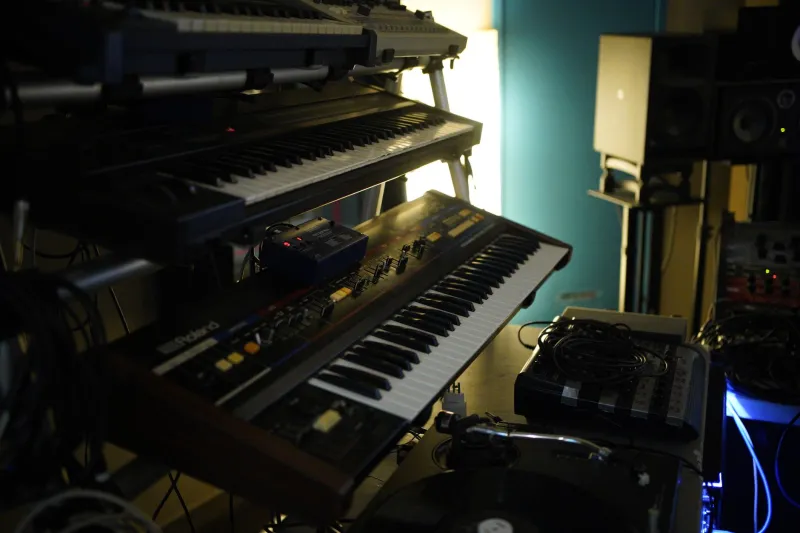
Not too long ago, getting your hands on a hardware synthesizer meant either saving up for months, hunting through eBay listings at 1 AM, or settling for a software emulation and telling yourself it was basically the same thing. For a lot of aspiring producers in the US, especially those outside major music cities like Los Angeles or New York, physical synths felt like something that belonged to a different tax bracket.
That story is changing pretty fast.
The Reissue Wave Nobody Saw Coming
Korg, Roland, Behringer, Arturia, and a handful of smaller manufacturers have spent the last few years quietly flooding the market with affordable hardware. And we're not talking about toy-grade knockoffs — we're talking about instruments built around the same circuits, the same filter architectures, and in some cases the very same chips that defined some of electronic music's most iconic sounds.
Korg's Volca series has been doing this for years, but the trend has accelerated. Roland's AIRA Compact line brought the sound of the TR-808 and TB-303 into a $200 price range. Behringer's controversial but undeniably popular lineup of classic synth clones — the Model D, the Neutron, the Pro-1 — put Moog and Sequential Circuits-adjacent tones within reach of producers who couldn't justify a four-figure vintage purchase. Arturia's MiniFreak sits at a price point that would've been unthinkable for a feature set like that five years ago.
The message from manufacturers seems pretty clear: the bedroom producer market is real, it's large, and it's willing to spend money on hardware if the entry price makes sense.
Who's Actually Buying These Things
Talk to producers who picked up their first hardware synth in the last two years and you'll notice some patterns. A lot of them started in software — Ableton, FL Studio, GarageBand — and hit a wall where everything started sounding the same. Not because the software was bad, but because having unlimited virtual instruments made it easy to never commit to anything.
Hardware forces a different kind of decision-making. When you're turning a physical knob, you're committing to a sound in a way that clicking a virtual parameter doesn't quite replicate. The limitations become creative constraints, and creative constraints, as any experienced producer will tell you, are often where the interesting stuff happens.
For younger producers in cities like Atlanta, Chicago, and Houston — places with thriving electronic and hip-hop scenes but not necessarily the infrastructure of a coast — affordable hardware is doing something more than just providing gear. It's providing a physical connection to music-making that feels different from staring at a laptop screen. That tactile element matters more than the gear-versus-software debate sometimes acknowledges.
Does the Quality Actually Hold Up?
This is the honest question, and the answer is more nuanced than either camp in the "gear doesn't matter" debate wants to admit.
On the low end, yes, you can absolutely hear the difference between a $150 clone and a $2,000 original. Component quality, build tolerance, and analog circuit variation all contribute to the warmth and character that make vintage hardware valuable. A Behringer Model D is not a Minimoog Voyager. Anyone who tells you otherwise is either being disingenuous or hasn't spent much time with both.
But here's the thing: for most production contexts, especially in electronic music where sounds are layered, processed, effected, and compressed, the difference is not the difference between a good track and a bad one. It's a subtle distinction that matters most to the person making the music and least to the person hearing it on a streaming platform.
What's genuinely improved is build quality at the mid-tier. A $400-600 hardware synth in 2025 is a significantly better instrument than a $400-600 hardware synth from ten years ago. Manufacturers have gotten better at sourcing components, tightening tolerances, and shipping firmware that actually works out of the box. The entry-level experience has improved, and that matters a lot when you're talking about first-time buyers who don't have the technical background to troubleshoot a finicky piece of gear.
The Democratization Argument
There's a version of this story that's purely economic — cheaper gear means more people can make music, full stop. And that's true and worth celebrating. But there's another layer here that's specifically interesting for electronic music.
Electronic production has always had a complicated relationship with access. The genre was born in part from producers who built their own equipment because they couldn't afford what was commercially available, or who repurposed instruments in ways manufacturers never intended. That DIY ethos is baked into the culture. Affordable hardware isn't a departure from that tradition — it's a continuation of it.
When a 19-year-old in Des Moines can pick up a hardware sequencer and a couple of semi-modular synths for under $500 total, the creative conversation gets broader. Different life experiences, different sonic influences, different cultural reference points — all of that flows into the music. And for a genre that's genuinely global, having more American voices in the hardware conversation feels like a net positive.
The 'Gear Doesn't Matter' Crowd Has a Point, But Only Part of One
The counterargument to all of this is familiar: your favorite tracks were made with whatever was available, and Aphex Twin could make a classic album on a Fisher-Price keyboard. Skills beat gear every time. And yes, fundamentally, that's correct.
But "gear doesn't matter" can also become a way to dismiss the very real creative friction that comes from working with limited or low-quality tools. There's a difference between creative constraints that push you forward and technical limitations that just frustrate you. A synth that goes out of tune constantly, has noisy outputs, or has a terrible keybed isn't building character — it's wasting time.
The sweet spot is where the affordable hardware market is currently landing for a lot of producers: instruments that have genuine limitations, which is a feature, not a bug, but that don't have arbitrary technical failures that get in the way of making music.
What Comes Next
The trend isn't slowing down. More manufacturers are moving into the affordable space, and competition is pushing quality up while keeping prices relatively stable. The modular synthesis world, which was almost exclusively expensive until recently, is starting to see genuinely affordable entry points too.
For bedroom producers in the US who've been on the fence about hardware, 2025 might genuinely be the best time in the history of electronic music to buy a synth. Not because the gear will make the music for you — it won't — but because the tools are finally accessible enough that the only thing standing between you and your sound is the time you put in.