Beats Without Borders: Inside the Messy, Brilliant World of Cross-Continental Electronic Collaboration
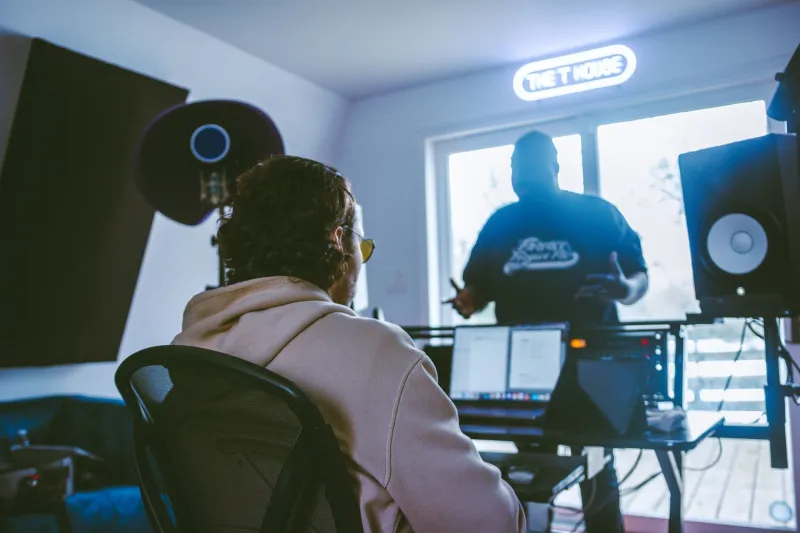
The fantasy version of a transatlantic collaboration goes something like this: two producers, oceans apart, open a shared session file, throw ideas back and forth in real time, and land on something neither of them could have made alone. It's seamless, it's inspired, and the cultural fusion just kind of happens naturally.
The reality involves a lot more Google Calendar math, a dropped Zoom call at a critical moment, and at least one heated conversation about whether a file should be exported as 24-bit WAV or FLAC.
But somewhere in the middle of all that friction? There's genuinely some of the most interesting electronic music being made right now.
The New Normal for Producer Partnerships
Remote collaboration in music isn't new — producers have been emailing stems back and forth for as long as there's been a reliable enough internet connection to do it. What's changed is the scale and the intentionality. Producers in the US are no longer just occasionally working with someone from another country. They're actively seeking out international partnerships as a creative strategy.
The reasons are varied. Some producers are chasing sounds they can't authentically access from their own cultural context — the specific rhythmic vocabulary of Afrobeats, the textural sensibility of UK garage, the hypnotic pulse of Brazilian baile funk. Others are drawn to the way working with someone from a completely different musical tradition forces them out of their own habits. When your collaborator has never heard the same reference tracks you grew up with, you can't just say "make it sound like that" and expect them to know what you mean.
That breakdown in shared reference points, which sounds like a problem, turns out to be one of the most creatively productive aspects of cross-continental work.
The Technical Headaches Are Real
Let's talk about the part that nobody puts in the press release. Real-time remote collaboration — the kind where two producers are actually in a session together, hearing the same thing at the same time — is still genuinely hard.
Latency is the main villain. Even with a solid internet connection on both ends, the round-trip delay between a producer in Chicago and one in Lagos or Berlin introduces enough lag to make live jamming feel slightly off. It's not unworkable, but it requires both parties to adjust their expectations about what "playing together" actually means in a remote context.
Tools like Audiomovers' Listento and Source-Connect have gotten better at minimizing that lag, and platforms like Splice and Bandlab have built entire ecosystems around asynchronous collaboration — where producers take turns working on a session rather than trying to be in it simultaneously. For a lot of cross-continental partnerships, that asynchronous model has become the default, and some producers swear it actually produces better results. You have time to sit with what your collaborator sent before you respond to it, rather than reacting in the moment.
File format disagreements are a more mundane but surprisingly common source of friction. Different DAWs, different sample rates, different bit depths, different plugin ecosystems — a producer in Atlanta running Ableton with a specific set of third-party plugins can't just send a project file to someone in Berlin running Logic and expect it to open cleanly. Stems — individual exported tracks for each element of a session — have become the universal language of remote collaboration, but even that comes with decisions about what gets printed to audio and what stays flexible.
Time Zones as Creative Constraint
Here's something that doesn't get talked about enough: the time zone gap, which seems like a purely logistical obstacle, has become a creative feature for some producer pairs.
When a producer in New York sends a half-finished idea to a collaborator in Nairobi before going to bed, they wake up to something that evolved while they were sleeping. There's a handoff quality to it — each person gets the track in a state of incompleteness and has to decide what it needs next without being able to ask. It forces a kind of musical intuition that a real-time session, where you can talk through every decision, doesn't always require.
Several producers who've worked this way describe it as the electronic music equivalent of a round-robin writing exercise. You're not just building on your own ideas — you're responding to choices you wouldn't have made yourself, and the result is something genuinely collaborative rather than one person's vision with another person's contributions layered on top.
The Sound That Comes Out
What does cross-continental electronic music actually sound like? That's almost an unanswerable question because the whole point is that it sounds different every time. But there are some patterns.
Rhythmic hybridity shows up constantly. A producer trained in American house or techno has a specific relationship with the grid — where the kick lands, how the swing is applied, what syncopation feels natural. A producer working in Afrobeats or UK drill has a completely different intuitive sense of rhythm that doesn't always map cleanly onto a 4/4 grid. When those two approaches meet in a session, the results tend to be rhythmically interesting in ways that neither producer would've landed on independently.
Textural contrast is another common outcome. Producers from different regions often have different default timbral palettes — the kinds of sounds that feel "normal" to them. When those defaults collide, the resulting mix of timbres can feel fresh in a way that's hard to engineer intentionally.
The Tools Getting Better at This
The infrastructure for remote collaboration is improving fast. Splice's real-time collaboration features have matured significantly. BandLab's browser-based DAW has made it possible for producers with limited hardware to participate in sessions without needing a specific software setup. Even Ableton has been building out Link features that make tempo-synced remote sessions more viable.
On the communication side, Discord has become the de facto hub for a lot of producer communities that cross national lines. Voice channels, file sharing, and persistent chat history make it easier to maintain the kind of ongoing creative relationship that good collaboration requires — not just a one-off exchange of stems, but an actual working partnership that develops over time.
AI-assisted tools are also starting to play a role. Some producers are using AI to handle the more tedious parts of remote sessions — automatic stem separation, format conversion, tempo and key matching — which frees up more of the actual collaboration time for creative decisions rather than technical troubleshooting.
Why It Matters for Electronic Music
Electronic music has always been a global conversation. The genre's history runs through Detroit, Chicago, Berlin, London, Tokyo, and São Paulo in ways that are deeply interconnected. What's new is that the infrastructure for that conversation has become accessible enough that it doesn't require label budgets or international travel to participate in.
For US producers especially, the opportunity to engage with that global conversation from a bedroom studio — with nothing more than a decent computer, a solid internet connection, and the willingness to navigate a few time zone headaches — is genuinely significant. The music that comes out of those sessions doesn't sound like it came from one place, because it didn't. And in 2025, that might be the most interesting thing a track can say about itself.